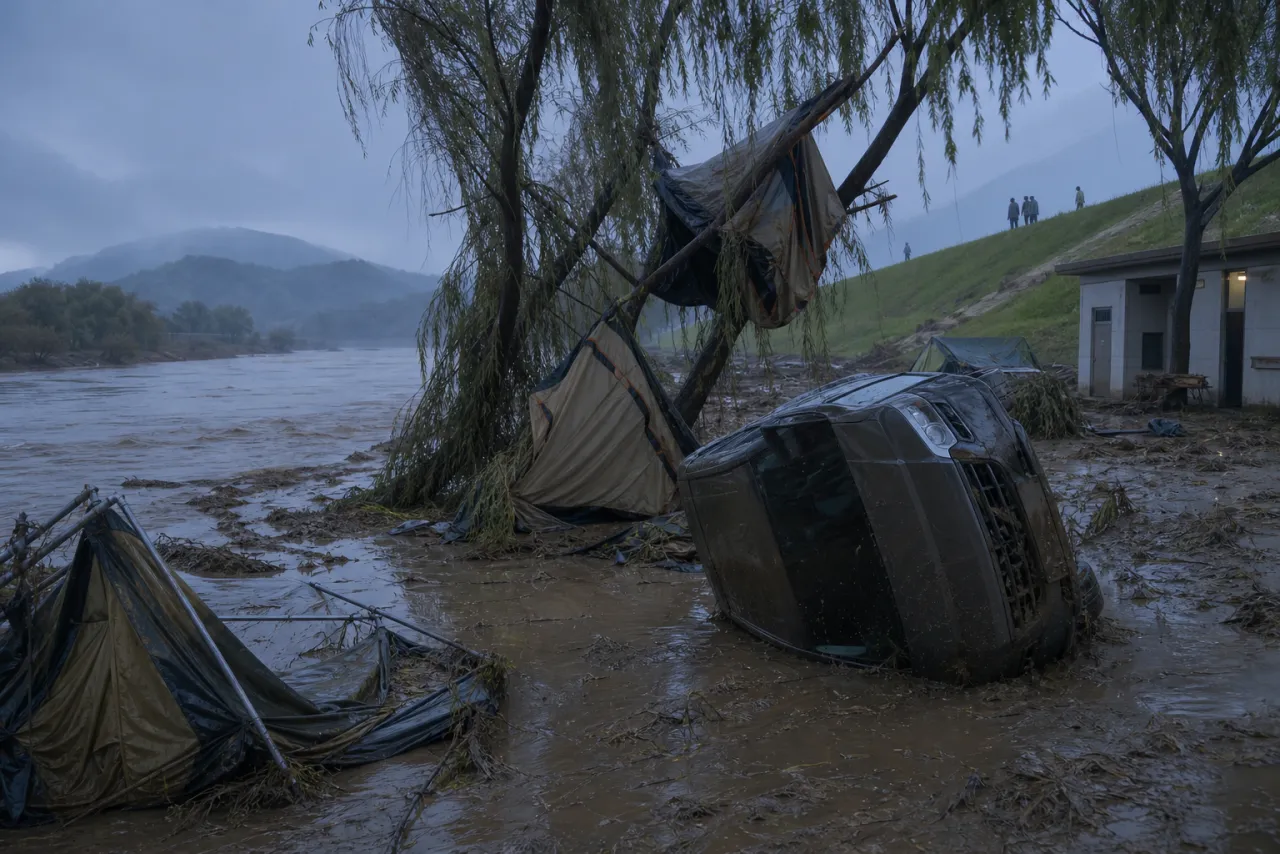
How to Survive a Flood or River Overflow: Riverside Camping Safety and a Survival Bag Checklist
▶ PLAY FREE NOWNo download · Phone or PC · 3–5 minutes per run · 10 languagesRiver flooding can build over hours, but when heavy rain upstream or a dam release hits, a riverside can go under in minutes. Before dawn on 6 September 2009 on the Imjin River, a dam upstream across the border released water without warning, the water level rose suddenly, and 6 people, including riverside campers, died. This guide lays out what to do, in the order you'll actually face it, from official sources (Korea Meteorological Administration, Ministry of the Interior and Safety, National Fire Agency, Korea Transportation Safety Authority). A survival bag (emergency go-bag) checklist is at the end.
1. Before riverside camping: your spot and information
- Don't pitch a tent on riverbanks, riverside flats, or gravel bars overnight. That's where the water comes first.
- Check heavy rain warnings and dam release notices. Korea Meteorological Administration weather service, emergency alert texts, local government broadcasts. In heavy rain, stop camping, swimming, and fishing and move to safety immediately (Korea Meteorological Administration heavy rain guidelines).
- Scout the route to high ground in daylight. Evacuation spots like levees, hills, and village halls — and low paths that flood first, like footbridges over ditches and low causeways.
- Keep the survival bag at the tent door. In the car trunk, you'll have to go down low to get it.
2. When the alarm sounds: move before you check
When an emergency alert text, siren, or announcement goes off, get up right away, put on shoes, and head for high ground. In the minute you spend rereading the text, the river can rise tens of centimeters. On your way out, pound on the next tent and shout loudly. Many people sleep in earbuds or can't hear broadcasts over the rain. A whistle carries farthest. Leave the tent and gear.
3. Where to: away from the river, to the nearest high ground
If water rises even a little, move immediately to high ground or a nearby evacuation site (Korea Meteorological Administration · Ministry of the Interior and Safety). Evacuation routes should avoid riverbanks, mountain paths, areas around utility poles or transformers, and flooded areas. Take the slope path, even if it's a detour. One-story restrooms and campsite office buildings can fill to the roof and don't make good refuges.
4. Don't cross flowing water (15cm · 30cm)
According to US FEMA and the National Weather Service (NWS), just 15cm of flowing water can knock a person down, and 30cm can sweep a car away. At night you can't see the depth or the current. Don't cross flooded roads or bridges, since they may be damaged. If the path is cut off, go around, or call 119 from nearby high ground and wait for help (Korea Meteorological Administration heavy rain guidelines).
5. Abandon the car
- Don't try to drive out as the water rises. Riverside parking lots, access roads, and low causeways flood first.
- The Korea Transportation Safety Authority advises: don't drive through roads where water is over half the tire; get out of the car. In tests, at a water depth of about 50cm, water pressure made the doors hard to open.
- If water comes in, break the corner of a side window with the metal headrest post or an emergency hammer and get out. Don't wait inside the car.
6. If stranded: give your location first, then signal
- If stranded on a roof or in a tree, don't force your way through the water or try to swim.
- Start with “where” when calling 119: campsite name, building, nearby utility pole number, Korea national grid location number. Then how many people and their condition.
- Signal with a flashlight (three short, three long, three short) and a whistle. Your voice gets drowned out by the water.
- For someone in the water, don't jump in; throw something that floats, like a rope, empty water bottle, or cooler, and call 119 (National Fire Agency water rescue guide).
7. Don't go back before the all-clear
Even if the water briefly recedes, another release or more rain can raise it again. Don't go down to the river to check your car or tent. Staying wet in the rain for a long time can cause hypothermia even in summer. Wrap up in a rain poncho or foil blanket and sit close together, or move inside a designated shelter (village hall, school). Don't touch downed power lines or wet electrical equipment. After the all-clear, register at the shelter so you aren't left listed as missing.
Survival bag (emergency go-bag) checklist — lasting 72 hours
Korea's Ministry of the Interior and Safety public guidelines say to pack an emergency go-bag with bottled water, emergency food, a flashlight, a portable radio, a power bank, basic medicine, masks, a whistle, an ID copy, and cash, and keep it near the exit. The UK Government's Be Ready recommends, for three days (72 hours), 3L of drinking water per person per day, food that needs no cooking, a battery or wind-up FM radio, a flashlight and spare batteries, cash, copies of documents like passports, and basic medicine. Japan's Prime Minister's Office recommends water and emergency food for at least 3 days, and a week's supply for major disasters.
- ☐ Bottled water — 3L per person per day × 3 days
- ☐ Emergency food — 3 days of no-cook food (canned goods, nuts, energy bars)
- ☐ Flashlight + spare batteries (instead of candles)
- ☐ Portable (battery or wind-up) radio
- ☐ Power bank (fully charged)
- ☐ First-aid kit, basic and prescription meds
- ☐ Whistle
- ☐ Foil blanket, rain poncho
- ☐ Cash (a few bills and coins)
- ☐ Copies of ID and important documents
- ☐ Masks, gloves, wet wipes
When camping, keep this bag at the tent door; at home, by the front door. Instead of panic buying, build it up a little each time you shop.
Practice with the simulation
Reading a list is easy; remembering it the moment a 2 a.m. siren wakes you is hard. Night on the Imjin: Release Without Warning is a free browser game where you make these decisions yourself at a riverside campsite, against the clock (the campsite and characters are fictional). See the game guide
Sources
- Korea Meteorological Administration weather service, “Heavy Rain and Flood Guidelines”
- Korea Ministry of the Interior and Safety (Safety Portal), guidelines and public guidelines (emergency go-bag)
- National Fire Agency, 119 call guide, water rescue guide, first-aid guide
- Korea Transportation Safety Authority, vehicle flooding tests and guidance
- US FEMA and National Weather Service (NWS), “Turn Around, Don’t Drown” (15cm · 30cm)
- UK Government Be Ready (beready.campaign.gov.uk) — 3 days of emergency supplies
- Prime Minister's Office of Japan, “災害に備えて” (Preparing for Disasters) — stockpile at least 3 days, ideally a week
- News reports on the September 2009 Imjin River incident and the Gunnam Flood Control Dam
FAQ
What should I do first if a dam release alarm sounds while camping by a river?
Move before you check. Put on shoes, take only your survival bag, wake the next tent, and head for nearby high ground like a levee or hill. Leave the tent, gear, and car.
Can I cross if the water looks shallow?
No. Flowing water just 15cm deep can knock a person down, and 30cm floats a car. At night you can't see the depth. Go around, or call 119 from high ground.
What if I'm in a car and the water rises?
Abandon the car and get out right away. If water pressure keeps the door shut, break the corner of a side window with the metal headrest post or an emergency hammer. Don't wait inside the car.
What goes in a survival bag (emergency go-bag)?
Bottled water (3L per person per day × 3 days), emergency food, a flashlight and batteries, a portable radio, a power bank, basic medicine, a whistle, a foil blanket and rain poncho, cash, and an ID copy. These are what Korea's Ministry of the Interior and Safety, the UK Government, and the Japanese Government all recommend.
How many days of emergency food do I need?
At least 3 days (72 hours), and ideally a week for major disasters. Choose food you can eat without cooking, and rotate it as you check expiration dates.
Can I go back down as soon as the water recedes?
Wait for the all-clear. Another release or more rain can raise the water again, and debris in the mud and downed power lines are dangerous too.
What if I see someone in the water?
Don't jump in. Throw something that floats, like a rope, empty water bottle, or cooler, and give 119 the exact location.
What should I say first when calling 119?
“Where.” Give a findable location first, like the campsite name, building, utility pole number, or Korea national grid location number, then the number of people and their condition.